The Project
Início » The Project

THE PROJECT
American Studies Over_Seas
American Studies Over_Seas is the new designation of a project launched in 2019 by the American Studies research group at ULICES – The University of Lisbon Centre for English Studies as (Re)Imagining Shared Pasts Over the Sea and Across Borders, following the international conference Over_Seas: Melville, Whitman, and All the Intrepid Sailors held at the School of Arts and Humanities of the University of Lisbon in July of the same year.
The underscore sign in the title of the project is to be read as a sort of a sea wave rather than just a simple low line connecting the words “over” and “seas”, a reminder that the process of going overseas is much more than an escape from a given place. It often entails holding onto or losing our bearings, neither “on” nor “in” and not even quite “in-between.”
THE PROJECT
American Studies Over_Seas
In the most recent turn in the study of “America”, the sea occupies a central place. This transdisciplinary project delves into dialogue, reception and projections between the United States, the Americas, and Europe, focusing on the imagery and (re)constructions of our shared ocean(s).
Think through the sea
Especially centered on Portugal-US relations, “it aims to look from, think with, and think through the sea” (Jue 2020; Mentz 2024).
Environmentally-minded dimensions
We seek to research and apply more environmentally-minded dimensions and uses of language to current societal challenges.
Liminal spaces and borders
We work on liminal spaces and borders, simultaneously bridging shores and acknowledging separating markers.
BEYOND THE TRADITIONAL PREMISES
(Re)Imagining Shared Pasts, Bridging Ecological Temporalities
Embracing a new model
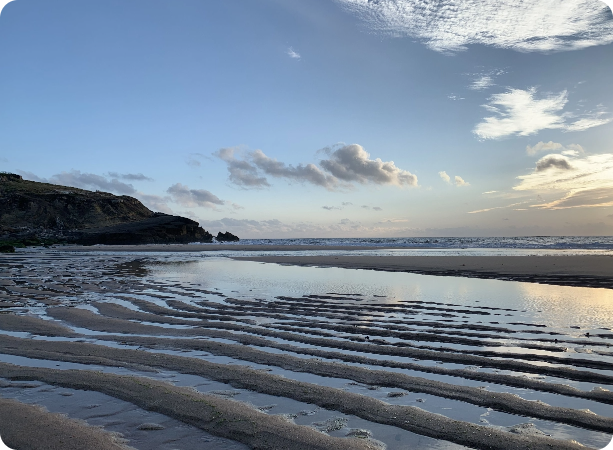
The sea itself is sufficient evidence that “the present is linked with past and future, and each living thing with all that surrounds it” (Carson, 1998 [1955], p. 37). (Re)Imagining Shared Pasts, Bridging Ecological Temporalities wishes to go beyond the traditional premises associated with the study of the maritime world and embrace a new model that “takes the sea as a proprioceptive point of enquiry” (Blum, 2010, p. 671).
The Atlantic as a fluid space
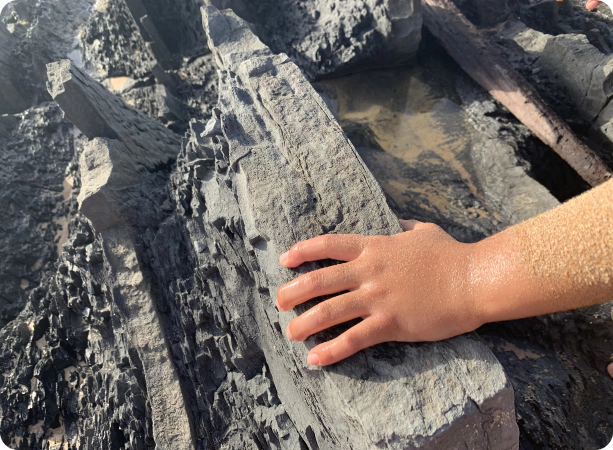
The project proposes to look at the Atlantic world and its construed imagery as a “site of memory,” a fluid space of cosmopolitan interchange of people, goods and ideas, and where the lines between history, literature and geography intersect (Boelhower, 2019, p. 37).
Moreover, this is a project that probes into the idea that there is “a broader, more general and inclusive history, Atlantic in its essence – whose passages were common to all those manifest events and to all the variant circumstances in Europe, Africa, and America” (Bailyn, 2005, p. 62), bearing in mind that “coasts opened the way not only to trade and cultural development but also to invasion and conquest” (Gillis 2012, p. 62).
Our research goals
Continue the work of ULICES RG 3 showcasing the cultural exchanges and dynamics of literary reception between Portugal and the United States, now re-centered on the thematics of the ocean, privileging a disciplinary contribution to ecocriticism and ecopoetics.
Re-position Portugal’s intermediate cultural agency and its historical dialogue with the Americas, bearing in mind colonial responsibilities, imperial and extractivist oceanic transits as well as the literary and artistic contributions derived from the culturally constructed and fabled Atlantic.
Combine literary studies and poetic experiments with historical, philosophic and scientific perspectives on the study of the “terraqueous entanglements” (Oppermann 2019, p. 443) of the Anthropocene.
Research interdisciplinarily for textual (and) ecological forms of acting locally on our shores.
We aim as well to connect with community-led projects, and reach out to the general population, policy-makers and activists working within affected coastal areas, starting in Portugal with the municipality of Almada.
TRANSDISCIPLINARY PROGRAM
Program "Over_Seas: Active Ties, Tides, and Times"
As we consolidate our long-term collaboration with Georgetown University, in 2024-2025 we wish to focus our attention on coastal studies, strengthening not only our current network of partners, but also the transdisciplinary reach of our activities. In a program titled Over_Seas: Active Ties, Tides, and Times, we are working together with colleagues from different areas.
Environmental history
Centre for History of the University of Lisbon and Centre for Humanities of NOVA Lisboa
Science
IDL/School of Sciences, ULIsboa
Philosophy
FCT of NOVA Lisboa
Anthropology
FCSH of Nova Lisboa

The sea and climate change
Coastal areas and intertidal zones, where a multitude of living beings and organisms are to this date survivors of sea pressures, with significant accommodations and changes over time, may yield some of the entangled stories we need to recover so as to sustain ourselves in the face of crisis, and to rehearse the “temporalities that might help us see, and do, the present differently” (Senda-Kook et al. 2023).
Natural habitats and residential / working areas threatened by climate change and other anthropogenic factors might benefit from recent proposals in literary and other humanities’ studies of taking “littoral” and “coastal form” (Samuelson 2017) to relate with others and the elements porously and empathically in a transforming world.
Symposium and reading circle
A symposium at the School of Arts and Humanities of the University of Lisbon (FLUL) is being programmed, along with a reading circle (Thinking with the Atlantic), public awareness roundtables and performances within community and cultural settings in Almada and Lisbon, and the publication of an art&poetry volume in ecopoetics with invited authors on breathing in and navigating the climate crisis.